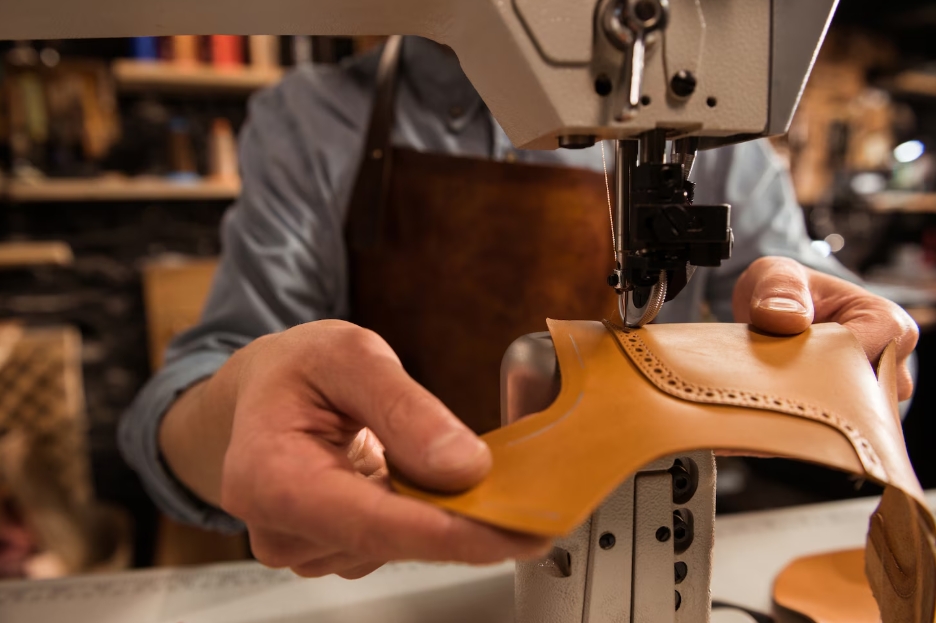
Seam strength is among the major factors that affect the performance and durability of the finished shoe in the shoe manufacturing industry. From casual wear, sports, outdoor wear, industrial, work, and otherwise, seams must resist repeated flexion, stretching, wear and tear, and exposure to a wide range of elements. Quality does matter, but one important aspect of this is the performance of the seam, which is greatly influenced by two related aspects: stitch type and thread selection.
Appropriate stitch construction and sewing thread selections can enhance the strength of seams, decrease production defects, and help to achieve a longer life of footwear. On the other hand, a bad twist break can result in weak points that may ultimately break the threads, open seams, cause the material to tear, or cause premature failure of products.
Table of Contents
Know the Strength Of Various Footwear Seams
Many materials are used to make uppers, quarters, tongues, linings, reinforcements, and decorations in various seams on footwear. It has been found that these seams, because they are located in various areas, have different modes of mechanical stress.
For instance, seams at the toe area can bend frequently, and seams at the heel and quarter zones can be put under stress and rubbed. Athletic shoes bend all the time, while safety shoes could receive heavier mechanical loads than industrial shoes.
Rather than considering thread strength alone, the importance of the strength of the seam will be assessed. It depends on the interaction between the following:
- Thread construction and size
- Stitch type
- Stitch density
- Material strength
- Seam allowance
- Needle selection
- Thread tension
- Sewing speed
- Machine settings
With knowledge of such factors, manufacturers can design a seam as per the particular apparel of the particular footwear.
The Role of Thread Selection
The work that connects the seam is the thread. Directly influencing seam durability are its tensile strength, elongation, abrasion resistance, and fatigability.
Polyester anti-abrasion threads are heavily used in shoes for their excellent tensile strength, resistance to moisture and most chemicals, and dimensional stability. High-tenacity polyester sewing thread can be especially valuable for footwear that experiences severe mechanical conditions.
One of the characteristic features of nylon threads is that they are very strong and flexible. They may work for seams where lots of movement and abrasion occur but may not be appropriate for environmental risks or application.
The thread construction is also important. Core-spun threads can combine the strength of a filament core with desirable sewing and appearance characteristics. Continuous filament threads can provide high strength and smooth performance, and bonded threads can increase the filament friction and anti-slit properties.
Therefore, it is not enough to choose the thread based on the high tensile strength alone. The entire service life of the thread should be taken into account by manufacturers.
How Stitch Type Influences Seam Strength
The use of this type of stitch affects how thread is laid inside a seam as well as how forces are distributed.
Various stitch constructions yield various combinations of strength, flexibility, styling, and how easily it opens. A stitch may be acceptable for a decorative panel but not a high-stress structural seam.
Lockstitch construction can create stable seams and accurate seams and is often used in upper assembly in footwear. They may work in situations where accuracy of dimensions and stitch formation are significant.
Other stitch constructions that form loops, such as chain stitch, can provide more flexible scope as a way of using some forms of stitching where the part of the footwear should have freedom of movement.
It should be used to vary the function of a seam, rather than use the same stitch all over the shoe.
Stitch Density and Its Effect on Strength
The number of stitches in a specified length of seam is known as stitch density. Its immediate impact ends up affecting the strength of seams, flexibility, material integrity, and the use of thread.
Increase the number of stitches to a reasonable level to increase the ability to hold seams. But too many stitches will make many more hole punchings that might dislodge some materials, producing a “hole-pinched” effect.
Excessively small stitches can be a problem as well. The seam may fail to distribute loads properly, making it prone to failure in terms of seam opening or slippage of material.
Thus, the optimum stitch density is dependent upon:
- Material thickness
- Material construction
- Thread size
- Seam location
- Required seam strength
- Expected flexing
- Product design (polyester embroidery thread)
Manufacturers should set the specifications for stitch density through testing and not use a universal value.
Matching Thread Size With Stitch Type
The size and type of thread should be taken into account at the same time. Too heavy a stitch with a wrong stitch construction can produce a bulky or stiff seam. However, a very fine thread might not be strong enough for the challenging seam.
When a shoe applies a higher dynamic stress, an engineer may choose a higher-strength thread, a correct thread stitch, and the required stitch density.
The task is to make a seam that is strong but not stiff and that will not harm or waste any significant amount of thread.
Material Compatibility Is Essential
The best thread and most suitable stitch will not improve the wretched fabric in the wrong seam if the fabric is unsuitable for the intended seam construction.
The different materials used for leather, synthetic leather, mesh, textile, canvas, and laminate vary in the manner they react to the penetrations of needles and the tension of thread. If too many needles penetrate leather, for instance, too many holes will be made too close together, making it less cohesive.
Distortion can be avoided in mesh and knitted material by using flexible stitch constructions. Heavy stitching can also compromise laminated materials by creating a potential for delamination around the stitching.
Thus, all footwear seams must always be perceived as a material-thread-stitch system.
Importance of Thread Tension And Machine Settings
The performance of the seams can vary greatly with different types of thread tension. Too much tension can make the material squish, make it pucker, or put the machine under more stress. Unless adequate tension is applied, it can lead to loose stitches and to insufficient seams.
The size and point length of the needle have to fit into the material and the thread. An improper or broken needle may cause holes to grow, damage fibers, or fail to form stitches.
There are also factors relating to the speed at which the sewing machine operates. Sewing at high speed may generate more friction and heat that can impact the performance of the threads. Good machine maintenance and appropriate thread finishes can assist in minimizing variations in the sewing environment.
Testing Seam Strength
The manufacturers should test threads and stitches systematically to ensure the combinations meet specifications. Seam strength can be measured using static seam-strength testing.
The movement of footwear seams is also occurring repeatedly, though, so flex-fatigue testing is important. Other factors that can affect long-term performance include abrasion, moisture, washing, and exposure to the environment.
Testing should evaluate:
- Seam tensile strength
- Stitch slippage
- Thread breakage
- Material tearing
- Abrasion resistance
- Flex-fatigue performance
- Environmental durability
It is important to test a complete stitched assembly and not just the thread.
Application-Specific Thread and Stitch Selection
There is more than one kind of footwear and underlying seam used and needed to be engineered in a different manner.
Footwear for athletic use typically demands footwork-receptive, flexible seams that will endure regular movement.
The footwear used outdoors could need special fibers that resist moisture, UV rays, and abrasion.
Durable and strong sews and load-bearing constructions are important for safety and work footwear.
Stitch appearance and uniformity might be more important in fashion shoes than necessary for sound structure.
Conclusion
The results show that footwear seam strength has been directly affected by both stitch type and the type of thread to be used in the seams, and both should be taken into account. Not all strong thread will produce a strong seam. Seam performance relies on the cooperation of the thread with stitches, stitch pattern, material, needle, and machine setting.
Steps are taken to enhance the durability of footwear by manufacturers when they choose the grade of the thread, match the type of stitches to the function of the seams, apply threads at adequate density, and conduct testing for real-life seams.
In effect, thread and stitch selection become part of an integrated engineering decision, which can help to minimize seam failures, enhance production quality, and achieve footwear that will deliver consistent performance over the expected service life.