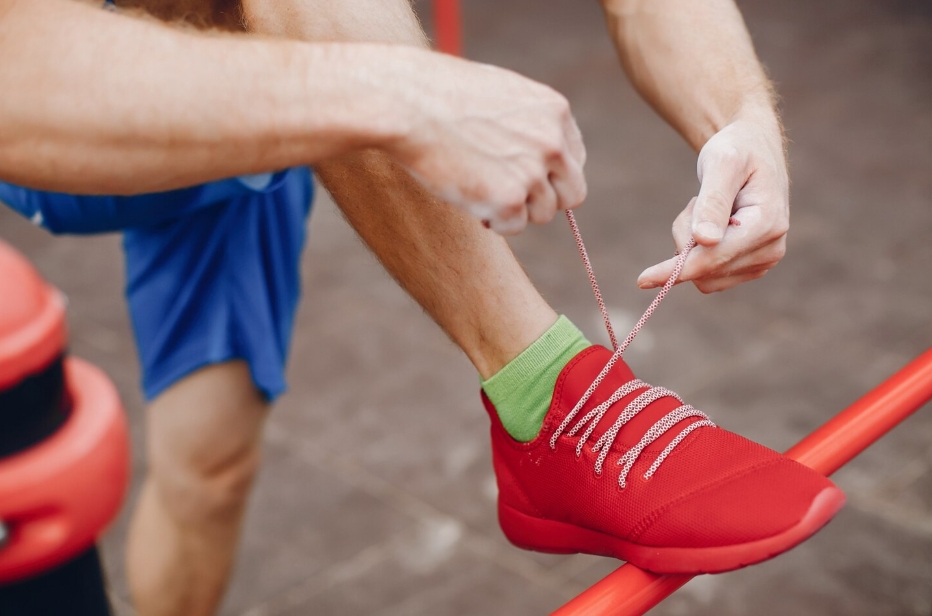
When we look at a sports shoe, our attention usually goes to the cushioning, sole, upper material, design, or overall appearance. When it comes to sewing thread, it’s not their first thought. Yet, behind every well-constructed sports shoe is a network of stitches that helps hold different components together.
Sports shoes are exposed to constant movement and pressure. Thousands of steps can be taken during a workout, and an athlete can make sudden turns, jumps, and landings in a short amount of time. Each of all these movements stresses the shoe’s upper and thus, the shoe’s seams. Hence, selecting the best sewing thread (bonded nylon thread) is a significant decision that’s far more crucial to make than it sounds.
Manufacturers of the thread face the problem of finding a thread with the correct strength, bending ability, durability, look, and manufacturing capability.
Table of Contents
Strength Is the Starting Point
A sports shoe’s seams must endure a lot of mechanical force. The foot sole may be subjected to cycling strain in different areas, including the toe, heel, quarter, vamp, collar, and reinforcement panels.
A thread with good tensile strength helps keep these seams intact and reduces the chances of thread breakage or seam opening.
Even though a strong sewing machine thread is the final goal, it’s not always the solution. Though very strong, some thread must be too rigid for the material or use.
Manufacturers are, therefore, searching for manufacturing a perfect balance between strength and flexibility, depending upon the sports shoes they are producing.
Flexibility Helps the Shoe Move Naturally
Sports shoes should move with the footwear. Running shoes bend with each step, training shoes are made to flex repeatedly, and football or basketball shoes have to bend and twist all of a sudden with each step.
The stitching needs to accommodate this movement.
On the other hand, if it is too stiff, the flexing process may cause undue tension on the stitching as well as its surrounding material. It can ultimately lead to weakened seams or broken threads.
A good length of thread has a good amount of take-up and pliability so that it will be able to conform to the ease of the upper seam. This is particularly relevant in the current era of sports shoes that feature knitted materials, mesh, and synthetic fabric.
Abrasion Resistance Cannot Be Ignored
It is also a frequent footwear production problem. The sewing thread goes through the needle multiple times when sewing, through the machine’s parts, and through the shoe material. Stitched regions can also rub on other parts of the shoe when it is in use.
This makes abrasion resistance an important consideration.
A thread that is abrasion resistant is less prone to wear out quickly, especially after repeated friction. It can come in handy for sports like running, hiking, outdoor training, football, or other demanding sports, to name a few.
The intent of the design is fairly simple: A thread should retain its strength and continue to function through repeated friction.
Moisture and Sweat Can Affect Performance
Moisture is a common occurrence in sports shoes. Moisture during the product’s life may occur from sweat, rain, humidity, wet ground and cleaning, or a combination of these.
This implies that manufacturers will need to take into account the effect of the chosen thread under moist or damp atmospheres.
The thread should be sufficiently ‘stable’ in water and not make it much less effective.
This is important for outdoor and work shoes, where the shoe can be subjected to varying climates.
Heat Matters During Manufacturing
Thread isn’t simply accountable for enduring conditions adopted by the consumer. Also, it should do its job correctly in the factory.
In modern footwear manufacturing, fast sewing processes can be performed. There can be heat produced between the thread, needle, and the machine and the material. If it is not appropriate, it could cause the thread to break, varying stitches, and overproduction stoppage during the manufacturing process.
This means that the type of thread for any specific sewing machine, sewing speed, needle, and fabric used should always be taken into account.
An optimized test can fail to provide performance on a production line.
Consistent Stitch Quality Improves the Finished Shoe
Ideally, a good sewing thread would move through the machine well without being baggy and form clean, tight stitches.
If there is inconsistency of thread performance, manufacturers may encounter such issues as
- Uneven stitches
- Thread breakage
- Loops
- Skipped stitches
- Excessive tension
- Seam puckering
- Increased machine stoppages
These issues have more than an impact on productivity. They can also influence the appearance and perceived quality of the finished shoe.
If stitches are exposed, for brands that incorporate this element into their design, it is even more critical to keep the stitch formation the same.
Appearance is Colorfastness
Sports footwear is a highly design-oriented product, and stitching in actual shoes is often an integral attribute to its image. Contrasting stitches, brand-colored threads, and decorative stitches can all add to the ending look.
But that’s not enough; it must be sustained.
The thread can be exposed to swearing, moisture, the sun, cleaning solutions, and rubbing. If the color fades or runs off, the shoe may begin to appear worn, even if the rest of the product is not worn.
Therefore, colorfastness, as well as mechanical performance, should be taken into account when the thread is highly visible, so manufacturers should consider this aspect.
Chemical and Environmental Resistance
The thread could be damaged by detergents, cleaning products, finishing chemicals, or environmental contaminants depending on the use and care of the shoe.
So the conditions of the completed product should be taken into account when choosing threads.
A casual shoe, for instance, could be at risk from everyday wear and tear compared to an outdoor sports shoe that is constantly being cleaned, washed, dried, and walked over in muddy, damp conditions.
A proper choice of thread intended for the shoe’s designated purpose can help prevent any performance issues in the future.
The Thread Must Work With the Upper Material
The biggest error manufacturers can make is to choose thread as a sole-size-fits-all strategy.
The uppers of sports shoes can be crafted by a variety of materials, such as:
- Engineered mesh
- Knitted fabrics
- Polyester textiles
- Synthetic leather
- Microfiber
- Reinforced textile panels
- Composite materials
Sewing is different for each material. The thread you use for a perfect fit with one material might not work on another.
This is why manufacturers should consider the full mix of thread, needle, machine, material, stitch type, and stitch density; thread alone does not matter.
Testing Before Production Makes a Difference
Manufacturers should always test threads under production conditions before accepting the thread for large-scale production.
To choose a practical approach, consider using trial samples to sew the same pattern with the same size fabric, machine, needle, stitch settings, and production speed in which you intend to make your product. These seams may then be examined for their appearance, strength, flexibility, thread breakage, and other functional specifications.
Testing can also help the manufacturer determine if adjustments need to be made, like with the speed of the sewing machine, the needle size, the length of the stitches, or the tension.
This small investment yields the necessary testing to avoid much larger issues like too much thread that creates thread pull or rework, production downtime, and early thread failure at seams.
Conclusion
Sewing thread is perhaps the smallest, but not the least important, part of a sports shoe. The right thread also makes seams strong, supports the flexibility of the shoe, resists friction and moisture, and keeps the shoe looking good throughout its life cycle.
In the case of manufacturers, it is not always the mightiest or the least expensive thread that is the best choice. The thread is the one that fits the top material, sewing machine, needle, stitch construction, and use of the shoe.
Threads are no longer the same as they used to be; as sportswear gets lighter, more flexible, and more performance-driven, they should be treated with the same scrutiny as other parts. A suitable sewing thread can help to enhance production efficiency, improve seam strength, enable a stronger impression, and, in the end, make a more dependable sports shoe.